

The Peptide-Based Vaccines Research Group was established in 2021 with the support of the MTA’s Momentum Programme. The peptides, peptide derivatives and conjugates produced in the group are used in various research areas. New formulation strategies are being developed to enhance the biological activity of synthetic peptides and to maintain their stability. Using colloidal chemistry systems, we develop peptide delivery platforms with several advantageous properties such as target delivery, programmed drug release and enhanced immunogenicity.
Main research topics:
– Synthetic vaccines
– Dendritic cell targeting with peptides
– Antimicrobial peptides and peptide derivatives
– Synthetic vaccines for immunotherapy
– Melanoma-specific peptides and peptide derivatives
Homepage of the Biological Soft Matter Platform
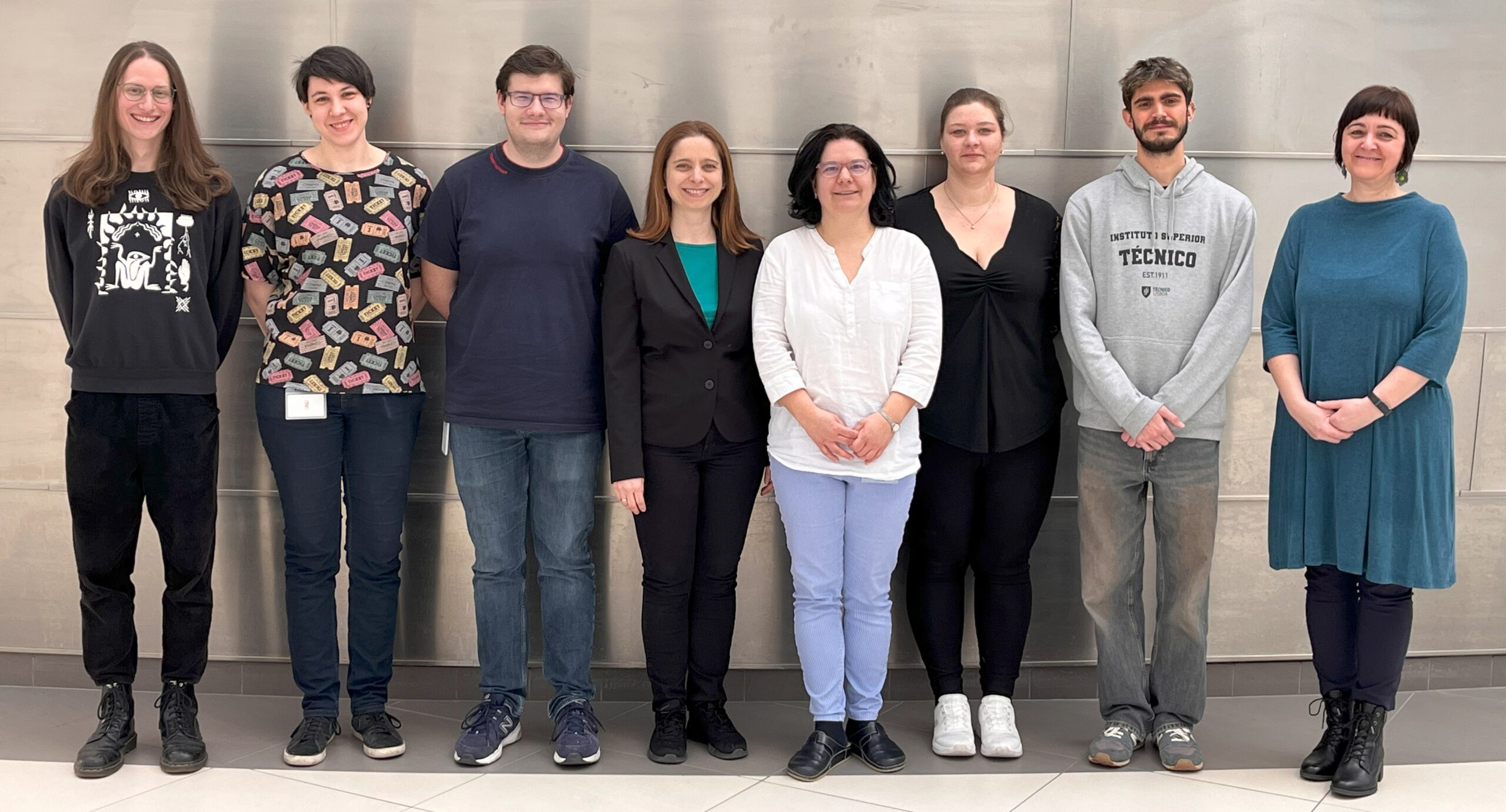
Members
Kata Horváti, group leader
Gergő Gyulai, research fellow
Krisztina Kiss, research fellow
Tamás Kőműves, PhD student
Szabolcs Gellény, undergraduate student
Katalin Kóczán, assistant
News
New year, new positions!
 We are offering 15 positions for early-stage researchers to participate in the EVADERE (Enhanced VAccines DEsign against antimicrobial REsistance) program, an EU-funded Marie Skłodowska-Curie PhD training network, in the fields of medicinal chemistry, immunology, microbiology, medical sciences, and vaccinology. If you want to make a difference in the global fight against antimicrobial resistance, sign up for the program! The information and requirements for applying can be found here: https://evadere1.eu/jobs.
At the HUN-REN TTK AKI the doctoral candidate (DC) will be trained in peptide synthesis and related organic chemistry to produce multi-epitope vaccine constructs. In cooperation with our industrial partner, Cyclolab, we will provide training in vaccine delivery and formulation techniques, as well as related analytical and characterization methods. In the host group, DC will receive training in working with cell cultures and performing basic biological studies (cell viability tests, cellular uptake, and cytokine production assays), and will work, in collaboration with other DCs, on adjuvant delivery, microneedle patches and vaccine efficacy tests.
Deadline: April 30, 2026, 5:00 p.m. GMT. Start of the PhD program: September 1, 2026.
Our research group has joined the SNOOPY – COST ACTION CA23111 program

Our research group has joined the SNOOPY – COST ACTION CA23111 program. SNOOPY (Searching for Nanostructured or pOre fOrming Peptides for therapY) is a network of young researchers from various scientific disciplines (chemistry, biology, biochemistry, materials science, nanotechnology, medicine, physics) whose goal is to map the self-assembly of bioactive peptides into functional nanostructures. The program consists of four work packages, and we have joined the WG2 team. WG2 deals with the improvement of the production, sustainability, and efficiency of bioactive peptides and nanostructures. Our first conference will be held in Nottingham in January 2026, where Kata Horváti will present on the self-assembly of lipopeptides and experiments on their formulation. https://cost-snoopy.eu/news/first-snoopy-wg2-meeting/
STEM Talk event with Nobel laureate Katalin Karikó in Berlin, with the participation of Kata Horváti (HUN-REN RCNS)
Followin g a fascinating and inspiring presentation of Nobel Prize winner Katalin Karikó, a STEM Talk event was held as part of the Berlin Science Week, at the Hungarian Embassy in Berlin, with the participation of young German and Hungarian researchers, on 10 November 2025.
The German Die Junge Akademie was represented by board member Hani Harb, an immunologist and assistant professor at the Technische Universität Dresden. The Hungarian Young Academy was attended by Kata Horváti, head of the MTA–HUN-REN TTK Momentum Peptide-Based Vaccines Research Group. The event was moderated by Victoria Azarov, a medical student at Semmelweis University and creator of the STEMtalk podcast series.

Before the main program, a delegation from the University of Szeged presented the exhibition “Forever Forward – Katalin Karikó,” which showcases the most important moments and awards in the Nobel Prize-winning researcher’s career.
The afternoon began with a welcome speech by Dr. Péter Györkös, Hungary’s ambassador, followed by Katalin Karikó’s presentation entitled “The Karikó Method,” in which she shared the story of her life, including all its difficulties, and conveyed powerful messages about courage, resilience and flexibility and – quoting János Selye – about stress and its management.
Our group participated in an international conference organized by the Hungarian Society for Microbiology
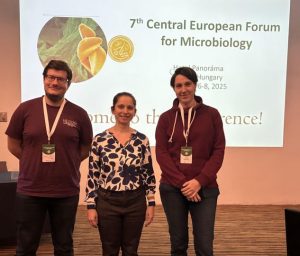
Krisztina Kiss, Tamás Kőműves, and Kata Horváti represented the research group at the conference held in Siófok between October 6 and 8, 2025. The poster presented at the CEFORM 7th Central European Forum for Microbiology event was about poloxamer micelles for the delivery of peptide-based drugs and antigens.
EVADERE Takes off!
Our EVADERE (Enhanced VAccines DEsign against antimicrobial REsistance) project was awarded a grant under the MSCA-DN programme with a score of 97.5%. The Marie Skłodowska Curie Doctoral Network programme supports collaborative research projects involving 15 PhD students. The EVADERE project is expected to start in summer 2025 and will focus on the development of novel antigens, adjuvants and delivery systems against antimicrobial resistance. HUN-REN TTK Peptide-based Vaccines Research Group participates in the call as work package leader.
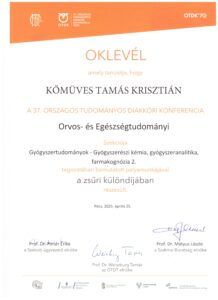
Our research group member (Peptide-Based Vaccines), Tamás Krisztián Kőműves won 1st place at the Semmelweis University Students’ Scientific Conference and was qualified for the national round (OTDK). Tamás’ topic is on the antimicrobial activity of cationic lipopeptides.


Defense of Chiara Bellini
On 14 November, our student Chiara Bellini successfully defended her PhD thesis with summa cum laude. Chiara has developed peptide-based vaccines against tuberculosis under the supervision of Kata Horváti. Her PhD work was carried out in the framework of the EU H2020 MCSA-ITN programme, as a participant of the BactiVax project. During her training she had the opportunity to do a secondment at the CycloLab Ltd. under the supervision of István Puskás.
Publications
2026
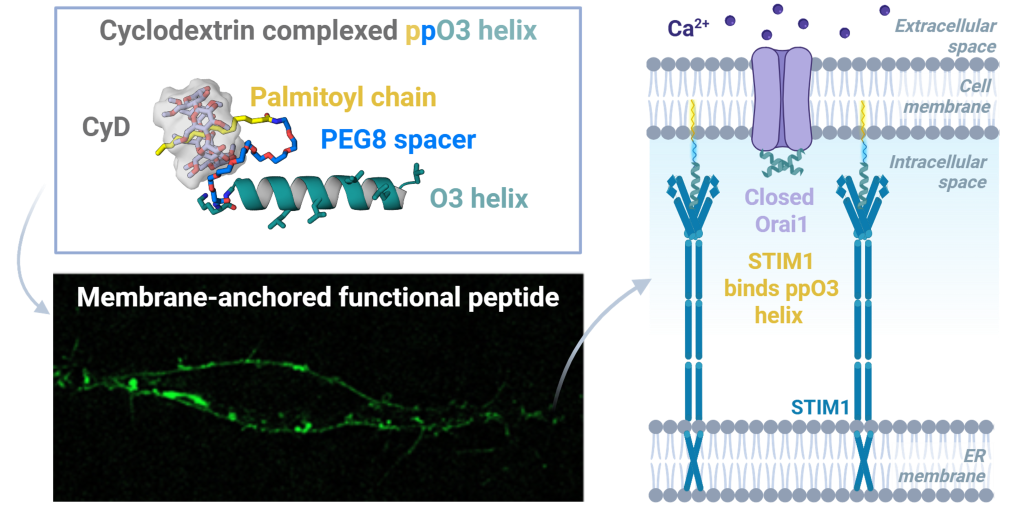
Juan Toledo-Marcos, Bruno Di Geronimo, Sanja Curcic, Viktor Farkas, Pedro A Sánchez-Murcia, Rainer Schindl, Bernadett Bacsa, Kata Horváti; A supramolecular complex of palmitoylated Orai C-terminal peptide and cyclodextrin targets the plasma membrane to reduce store-operated calcium channel activity. Mater. Adv. 2026; https://doi.org/10.1039/d6ma00756b Q1 journal
Ezequiel Nazareno Frigini, Marcela Vettorazzi, Imola Csilla Szigyártó, Fiza Faiz, Kata Horvati, Adriana Garro, Sergio Pantano, Tamás Beke-Somfai, Ricardo D. Enriz; Influence of Charge distribution in the mechanism of action of small-sized cationic peptides acting as antibacterial agents. Theoretical and experimental study. Phys. Chem. Chem. Phys. 2026; https://doi.org/10.1039/D6CP01408A Q1 journal
György Kasza, Á kos Fábián, Dóra Fecske, Anna Petróczy, Kata Horváti, and Béla Iván: Thermoresponsive Graft Copolymers of N‑Isopropylacrylamide and Hyperbranched Polyglycerol as Thermally Induced Drug Delivery and Release Nanoformulation Systems for Curcumin with High Colloidal Stability and Enhanced Anticancer. ACS Omega 2026, 11, 3780−3795. https://doi.org/10.1021/acsomega.5c05838 Q1 journal
Sohini Chakraborty, Kamal el Battioui, Dániel Molnár, Bálint Jezsó, Lejla Daruka, Tasvilla Sonallya, Tünde Juhász, Rita Hirmondó, Imola Cs. Szigyártó, Loránd Románszki, Natália Tőkési, Daniel Pinkas, Eszter Házy, Olivér Pavela, Andrea Bodor, Zoltán Varga, István Mándity, Mihály Kovács, Csaba Pál, Kata Horváti, Judit Tóth, Tamás Beke-Somfai: An ATP-Mediated Antibiotic β-Peptide Nanofiber That Kills Multidrug-Resistant Bacteria via a Multistage Mechanism. Advanced Science 13, no. 28 (2026): e22269. https://doi.org/10.1002/advs.202522269 D1 journal
2025
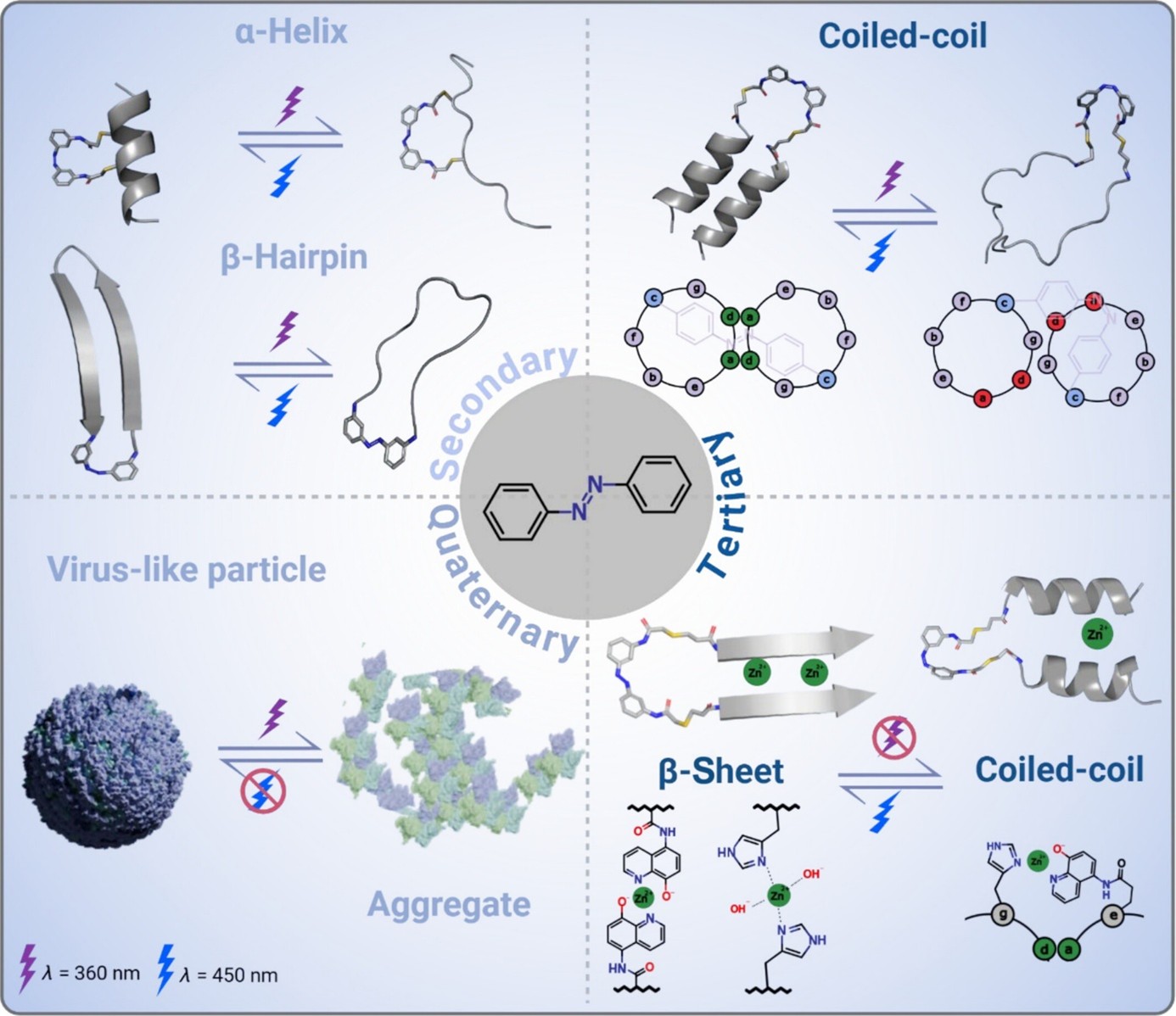 E Erdei, J T Marcos, N Varró, K Horváti, B Bacsa, I M. Mándity: Spatiotemporal control in biomedicine: photoswitchable peptides and foldamers. Br J Pharmacol. 2025;1–8. https://doi.org/10.1111/bph.70163. D1 journal
Chakraborty S., el Battioui K., Sonallya T., Szigyártó I.C., Horváti K., Varga Z., Juhász T., Beke-Somfai T.: Charge and length dependent build-up of environment sensitive lamellin β-peptides (2025) Physical Chemistry Chemical Physics, 27 (16), pp. 8540 – 8551. https://doi.org/10.1039/D4CP04561K Q1 journal
Fecske, D.; Kasza, Gy.; Gyulai, G.; Horváti, K.; Szabó, M.; Wacha, A.; Varga, Z.; Szarka, Gy.; Thomann, Y.; Thomann, R.; Mülhaupt, R.; Kiss, É.; Domján, A.; Bősze, Sz.; Bereczki, L.; Iván, B.: Self-Assembling Amphiphilic ABA Triblock Copolymers of Hyperbranched Polyglycerol with Poly(tetrahydrofuran) and Their Nanomicelles as Highly Efficient Solubilization and Delivery Systems of Curcumin. Int. J. Mol. Sci. (2025), 26, 5866. https://doi.org/10.3390/ijms26125866

Chiara Bellini, Unai Atxabal, Szilvia Bősze, Orsolya Dobay, Andrea Horváth, Imola Cs. Szigyártó, Tamás Beke-Somfai, Jesús Jiménez-Barbero, István Puskás, Kata Horváti*: Supramolecular complexes of ultrashort cationic lipopeptides with cyclodextrins: improved selectivity and therapeutic potential. Aggregate (2025) 0:e741; https://doi.org/10.1002/agt2.741 D1 journal
2024
 Ágnes Ábrahám, Gergő Gyulai, Judith Mihály, Andrea Horváth, Orsolya Dobay, Zoltán Varga, Éva Kiss, Kata Horváti*: Optimizing lipopeptide bioactivity: The impact of non-ionic surfactant dressing, J Pharm Anal. (2024) 101020, https://doi.org/10.1016/j.jpha.2024.101020 D1 journal
El Battioui K, Chakraborty S, Wacha A, Molnár D, Quemé-Peña M, Szigyártó IC, Szabó CL, Bodor A, Horváti K, … Beke-Somfai T. In situ captured antibacterial action of membrane-incising peptide lamellae. Nat Commun. (2024) 15(1):3424. doi: 10.1038/s41467-024-47708-4. D1 journal
György Kasza, Ákos Fábián, Dóra Fecske, Attila Kardos, Róbert Mészáros, Kata Horváti, Béla Iván. Hyperbranched polyglycerol grafted poly(N,N-diethylacrylamide) thermoresponsive copolymers as biocompatible, highly efficient encapsulation and sustained release systems of curcumin. Eur Polymer J (2024) 219:113378. https://doi.org/10.1016/j.eurpolymj.2024.113378 Q1 journal
Humer C, Radiskovic T, Horváti K, Lindinger S, Groschner K, Romanin C, Höglinger C: Bidirectional allosteric coupling between PIP2 binding and the pore of the oncochannel TRPV6. Int. J. Mol. Sci. (2024), 25(1), 618; https://doi.org/10.3390/ijms25010618 Q1 journal
2023
 Bellini C, Vergara E, Bencs F, Fodor K, Bősze S, Krivić D, Bacsa B, Surguta SE, Tóvári J, Reljic R, Horváti K*. Design and characterization of a multistage peptide-based vaccine platform to target Mycobacterium tuberculosis infection. Bioconjug Chem. (2023) 34:1738-1753. https://doi.org/10.1021/acs.bioconjchem.3c00273 D1 journal
Tóth G, Horváti K, Kraszni M, Ausbüttel T, Pályi B, Kis Z, Mucsi Z, Kovács G M, Bősze Sz, Boldizsár I. Arylnaphthalene lignans with anti-SARS-CoV-2 and antiproliferative activities from the underground organs of Linum austriacum and Linum perenne. J Nat Prod (2023) 86(4): 672–682. https://doi.org/10.1021/acs.jnatprod.2c00580 Q1 journal
2021
Horváti K, Fodor K, Pályi B, Henczkó J, Balka Gy, Gyulai G, Kiss É, Biri-Kovács B, Senoner Zs, Bősze Sz. Novel assay platform to evaluate intracellular killing of Mycobacterium tuberculosis: in vitro and in vivo validation. Front Immunol. (2021) 12:750496. doi: 10.3389/fimmu.2021.750496 Q1 journal
Juhász T, Quemé-Peña M, Kővágó B, Mihály J, Ricci M, Horváti K, Bősze S, Zsila F, Beke-Somfai T. Interplay between membrane active host defense peptides and heme modulates their assemblies and in vitro activity. Sci Rep. (2021) 11(1):18328. https://www.nature.com/articles/s41598-021-97779-2 Q1 journal
Farkas V, Ferentzi K, Horváti K, Perczel A. Cost-Effective Flow Peptide Synthesis: Metamorphosis of HPLC. Org. Process Res. Dev. (2021) 25(2) 182–191. https://doi.org/10.1021/acs.oprd.0c00178
Zürn M, Tóth G, Ausbüttel T, Mucsi Z, Horváti K, Bősze Sz, Sütöri-Diószegi M, Pályi B, Kis Z, Noszál B, Boldizsár I. (2021) Tissue specific accumulation and isomerization of valuable phenylethanoid glycosides from Plantago and Forsythia plants. Int. J. Mol. Sci. 2021, 22(8), 3880. https://doi.org/10.3390/ijms22083880 Q1 journal
Kósa N, Zolcsák Á, Voszka I, Csík G, Horváti K, Horváth L, Bősze Sz, Herenyi L. (2021) Comparison of the efficacy of two novel antitubercular agents in free and liposome-encapsulated formulations. Int. J. Mol. Sci. 2021, 22(5), 2457. https://doi.org/10.3390/ijms22052457 Q1 journal
Quemé-Peña M, Ricci M, Juhász T, Horváti K, Bősze S, Biri-Kovács B, Szereder B, Zsila F, Beke-Somfai T. (2021) Old Polyanionic Drug Suramin Suppresses Detrimental Cytotoxicity of the Host Defense Peptide LL-37. ACS Pharmacol. Transl. Sci. 4(1) 155–167. https://doi.org/10.1021/acsptsci.0c00155
2020
Bellini C, Horváti K*. Recent advances in the development of protein- and peptide-based subunit vaccines against tuberculosis. Cells 2020, 9(12), 2673; https://doi.org/10.3390/cells9122673.
Pári E, Horváti K, Bősze S, Biri-Kovács B, Szeder B, Zsila F, Kiss É. Drug Conjugation Induced Modulation of Structural and Membrane Interaction Features of Cationic Cell-Permeable Peptides. Int J Mol Sci. 2020 21(6). pii: E2197. doi: 10.3390/ijms21062197.
Ricci M, Horváti K, Juhász T, Szigyártó I, Török Gy, Sebák F, Bodor A, Homolya L, Henczkó J, Pályi B, Mlinkó T, Mihály J, Nizami1 B, Yang Z, Lin F, Lu X, Románszki L, Bóta A, Varga Z, Bősze Sz, Zsila F, Beke-Somfai T. (2020) Anionic food color Tartrazine enhances antibacterial efficacy of Histatin-derived peptide DHVAR4 by fine-tuning its membrane activity. Quarterly Rev Biophysics 53, e5, 1–11. https://doi.org/10.1017/S0033583520000013
2019
Horváti K*, Pályi B, Henczkó J, Balka Gy, Szabó E, Farkas V, Biri-Kovács B, Szeder B, Fodor K. (2019) A convenient synthetic method to improve immunogenicity of Mycobacterium tuberculosis related T-cell epitope peptides. Vaccines 7(3), 101. https://doi.org/10.3390/vaccines7030101
Zürn M, Tóth G, Mazákné Kraszni M, Sólyomváry A, Mucsi Z, Deme R, Rózsa B, Fodor B, Molnár-Perl I, Horváti K, Bősze Sz, Pályi B, Kis Z, Béni Sz, Noszál B, Boldizsár I. (2019) Galls of European Fraxinus trees as new and abundant sources of valuable phenylethanoid and coumarin glycosides. Industrial Crops and Products 139: 111517-26. https://doi.org/10.1016/j.indcrop.2019.111517
Gyulai G., Ouanzi F., Bertóti I., Mohai M., Kolonits T., Horváti K., Bősze S. Chemical structure and in vitro cellular uptake of luminescent carbon quantum dots prepared by solvothermal and microwave assisted techniques. J. Colloid Interface Sci. 2019, 549, 150-161. https://doi.org/10.1016/j.jcis.2019.04.058
Quemé-Peña M, Juhász T, Mihály J, Szigyártó IC, Horváti K, Bősze S, Henczkó J, Pályi B, Németh C, Varga Z, Zsila F, Beke-Somfai T. (2019) Manipulating active structure and function of cationic antimicrobial peptide CM15 by the polysulfonated drug suramin: a step closer to in vivo complexity. ChemBioChem 20:1–14. https://doi.org/10.1002/cbic.201800801
2018
Ábrányi-Balogh P, Petri L, Imre T, Szijj P, Scarpino A, Hrast M, Mitrovic A, Fonovic UP, Németh K, Barreteau H, Roper DI, Horváti K, Ferenczy GyG, Kos J, Ilas J, Gobec S, Keserű GyM. (2018) A road map for prioritizing warheads for cysteine targeting covalent inhibitors. Eur J Med Chem. 2018. 160:94-107. https://doi.org/10.1016/j.ejmech.2018.10.010
Kiss É, Gyulai G, Pári E, Horváti K, Bősze S. (2018) Membrane affinity and fluorescent labelling: comparative study of monolayer interaction, cellular uptake and cytotoxicity profile of carboxyfluorescein-conjugated cationic peptides. Amino Acids 50(11):1557-1571. doi: 10.1007/s00726-018-2630-7
Horváti K, Gyulai G, Csámpai A, Rohonczy J, Kiss É, Bősze Sz (2018) Surface layer modification of PLGA nanoparticles with targeting peptide: a convenient synthetic route for Pluronic F127 – Tuftsin conjugate. Bioconjugate Chem. 29(5):1495-1499. https://doi.org/10.1021/acs.bioconjchem.8b00156
Zsila F, Juhász T, Bősze Sz, Horváti K, Beke-Somfai T (2018) Hemin and bile pigments are the secondary structure regulators of intrinsically disordered antimicrobial peptides. Chirality 30(2):195-205. https://doi.org/10.1002/chir.22784
Sipka S, Papp Zs, Kovács I, Horváti K, Bősze Sz, Hudecz F, Szilasi M (2018) Index of stimulation and TNFα measurements used for laboratory diagnosis of latent Tuberculosis as a new principle. Int J Pulmonol Infect Dis.1(2):1-5. DOI:10.15226/2637-6121/1/2/00108
2017
Horváti K, Bacsa B, Mlinkó T, Szabó N, Hudecz F, Zsila F, Bősze Sz (2017) Comparative analysis of internalisation, haemolytic, cytotoxic and antibacterial effect of membrane-active cationic peptides: aspects of experimental setup. Amino Acids. 49(6):1053-1067. DOI: 10.1007/s00726-017-2402-9
Zsila F, Bősze Sz, Horváti K, Szigyártó CsI, Beke-Somfai T (2017) Drug and dye binding induced folding of the intrinsically disordered antimicrobial peptide CM15. RSC Advances 7:41091-41097. DOI: 10.1039/c7ra05290a
2016
Ábrahám Á, Baranyai Zs, Gyulai G, Pári E, Horváti K, Bősze Sz, Kiss É (2016) Comparative analysis of new peptide conjugates of antitubercular drug candidates-model membrane and in vitro studies. Colloids Surf B Biointerfaces. 28(147):106-115. https://doi.org/10.1016/j.colsurfb.2016.07.054
Horvati K, Bősze Sz, Gideon HP, Bacsa B, Szabó TG, Goliath R, Rangaka MX, Hudecz F, Wilkinson RJ, Wilkinson KA (2016) Population tailored modification of tuberculosis specific interferon-gamma release assay. J Infection 72:179-188. https://doi.org/10.1016/j.jinf.2015.10.012
Alumni
Chiara Bellini, PhD student
Ildikó Szabó, senior researcher
Pintér Bence, undergraduate student