

Introduction and research focus
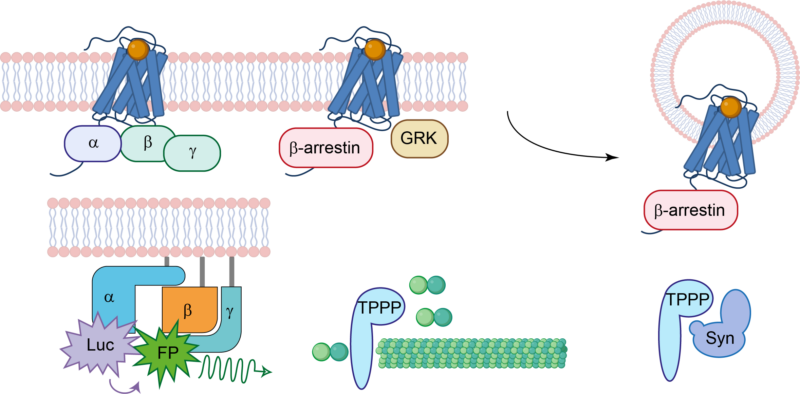
The main area of research of the Cellular Physiology Research Group is the signaling and regulation of G protein-coupled receptors (GPCRs). Our primary focus is on deciphering the pathways of signal transduction of these receptors, placing particular emphasis on the role of β-arrestins. Committed to advancing our understanding of cellular signaling, we investigate β-arrestin functions both in GPCR signaling and independently of GPCRs. Additionally, we explore the interplay between these proteins and the cytoskeletal system.
Exploring Cellular Signaling: GPCRs, Arrestins, Ligand-Receptor Interactions, and Beyond
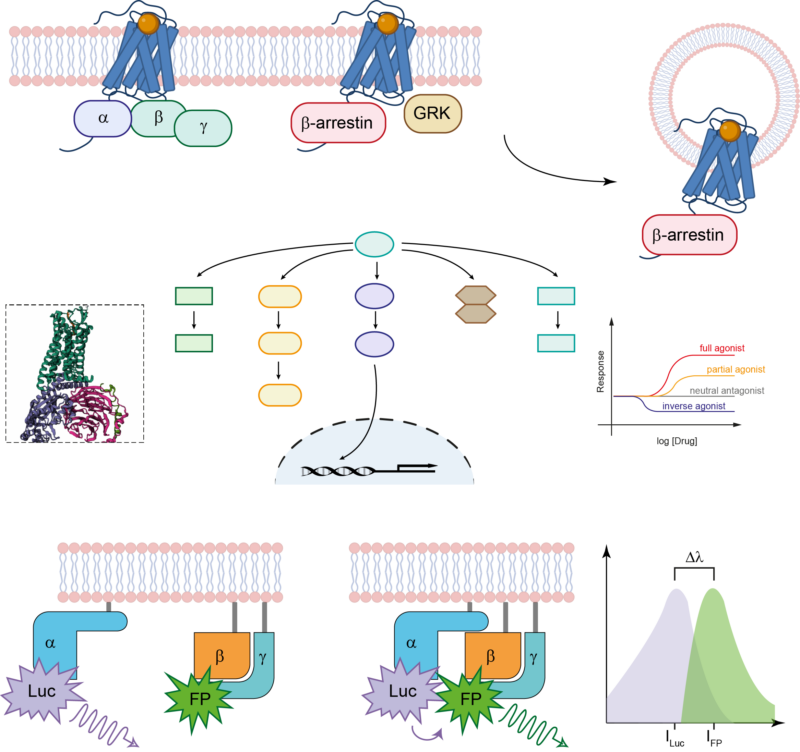
Our main focus is the world of G protein-coupled receptors (GPCRs), we are investigating fundamental aspects of ligand-receptor interaction, β-arrestin functions, and intracellular signaling. In our exploration of GPCRs, the AT1 angiotensin receptor (AT1R) takes center stage, serving as a prototypical GPCR with implications in various physiological and pathological conditions. Beyond GPCRs, our research also investigates the signaling network of the receptor partner proteins, named β-arrestins. β-arrestins interact with GPCRs and with a spectrum of non-receptor proteins. This research broadens our knowledge about the regulatory landscape of β-arrestin across diverse cellular signaling pathways. We employ a diverse array of molecular biology, biophysical, and biochemical techniques, complemented by cutting-edge bioinformatic approaches. Our work not only contributes to the advancement of scientific knowledge but also holds promising implications for innovative drug discovery and therapeutic interventions.
TPPP regulates the dynamics of the microtubule network and promotes the pathological assembly of alpha-synuclein hallmarking Parkinson’s disease
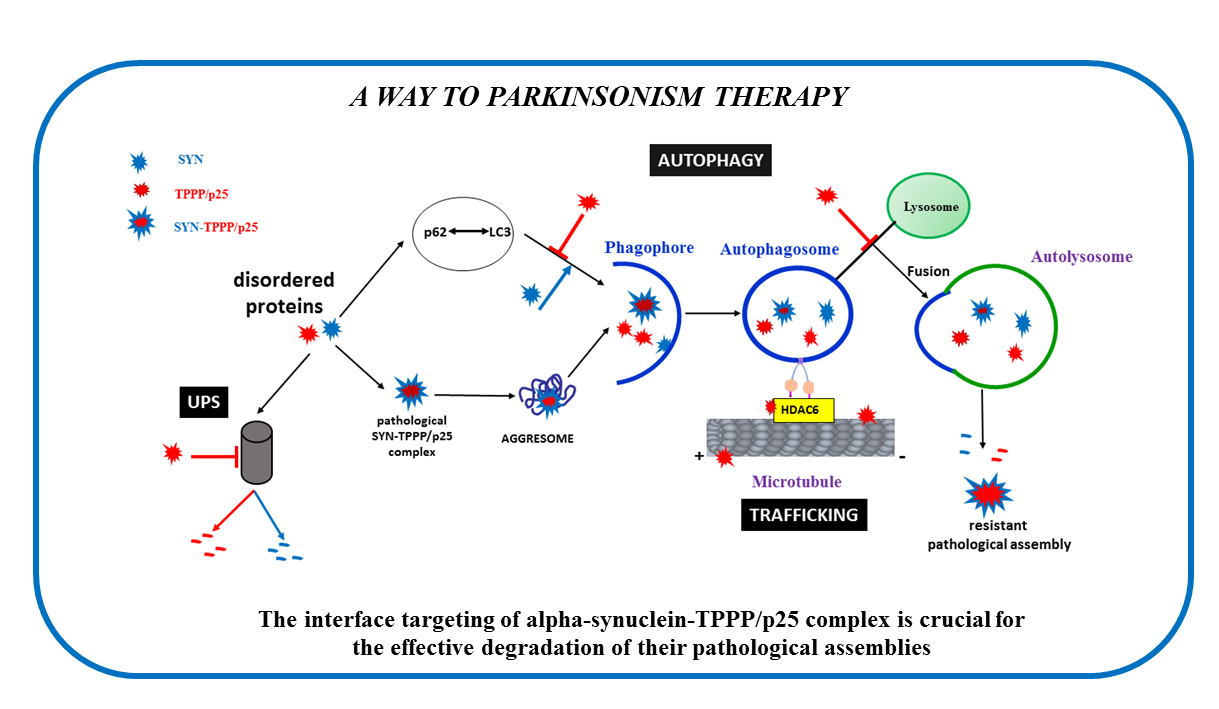
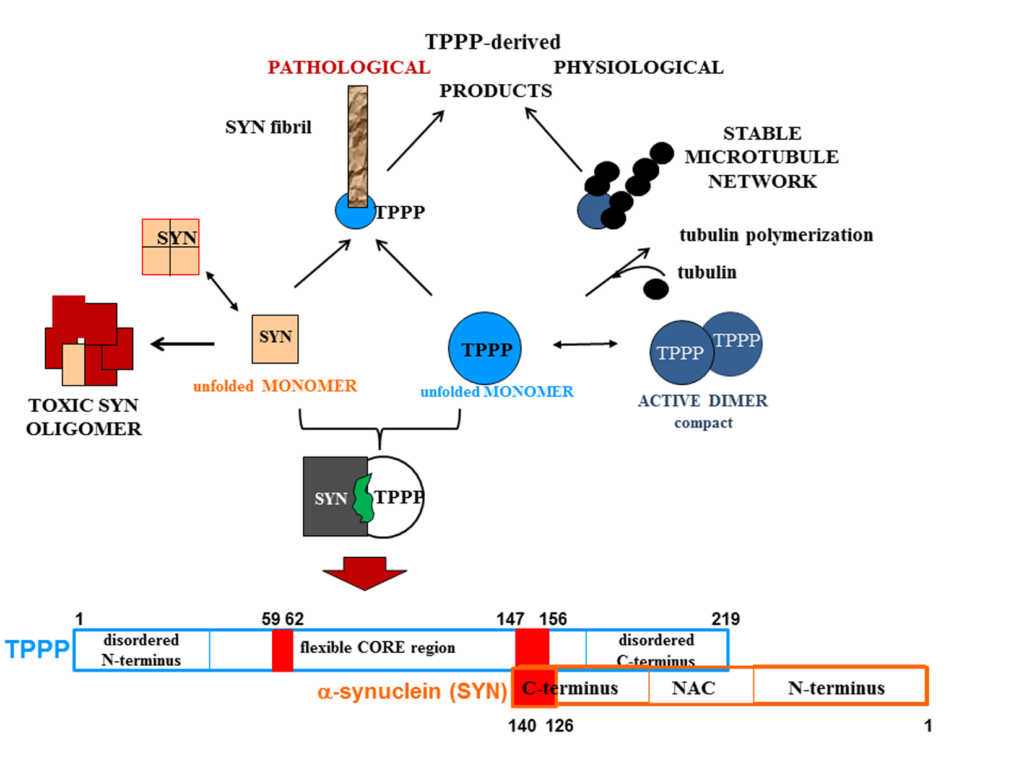
One of the partners of the dynamic microtubule network, crucial for physiological and pathological processes, is Tubulin Polymerization Promoting Protein (TPPP), which is expressed in oligodendrocytes during brain development. The multifunctional TPPP modulates microtubule dynamics and stability, inhibits cell proliferation, and plays a role in Parkinsonism. In Parkinson’s disease, TPPP and alpha-synuclein (SYN) co-localize, which hinders their elimination through cellular mechanisms. The two proteins are expressed in distinct cell types in normal brain; their soluble homo- and hetero-oligomers are the fatal species in Parkinson’s disease. Our research highlights TPPP as a key player and proposes an “interface-targeting strategy” to prevent SYN-TPPP assembly, offering a novel approach to eliminate toxic protein aggregates. This discovery has potential implications for clinical research and drug development targeting the SYN-TPPP interface.
NanoFLiR
Quantitative super-resolution mapping of the ligand-accessible receptor pool in tissue
Marie Skłodowska-Curie Actions Postdoctoral Fellowship, Global Fellowship
Project number: 101270269
Project period: 1 May 2026 – 31 August 2028
NanoFLiR is a Marie Skłodowska-Curie Actions Global Postdoctoral Fellowship carried out by Dr. András Dávid Tóth at the HUN-REN Research Centre for Natural Sciences under the supervision of Prof. László Hunyady, in collaboration with Indiana University Bloomington.
G protein-coupled receptors (GPCRs) are among the most important targets of currently used medicines. However, conventional measurements of receptor expression do not necessarily reveal which receptors are accessible to drugs within their native tissue environment.
NanoFLiR aims to develop an improved pharmacon labeling-based approach for the quantitative super-resolution mapping of ligand-accessible receptor populations directly in tissue. The project combines advanced pharmacology, high-resolution microscopy and quantitative image analysis to investigate receptor accessibility at the cellular and subcellular level.
During the outgoing phase at Indiana University Bloomington, the project is supervised by Prof. István Katona and Prof. Ken Mackie and focuses on establishing and validating the NanoFLiR approach using the cannabinoid CB1 receptor (CB1R) in brain tissue.
During the return phase at HUN-REN RCNS, the methodology will be extended to the angiotensin II type 1 receptor (AT1R) and the spatial organisation of the renin-angiotensin-aldosterone system in kidney tissue. The project also builds on chemical biology and ligand-development expertise through collaboration with the research group of Prof. György Keserű at HUN-REN RCNS.
The fellowship promotes international knowledge transfer between HUN-REN RCNS and Indiana University Bloomington and integrates expertise in GPCR pharmacology, neuroscience, chemical biology, super-resolution microscopy, quantitative bioimaging and kidney biology.
Results and outputs
This page will be updated as NanoFLiR results become publicly available.
Project information
MSCA Fellow: Dr. András Dávid Tóth
Project supervisor: Prof. László Hunyady
IU supervisors: Prof. István Katona and Prof. Ken Mackie
Beneficiary: HUN-REN Research Centre for Natural Sciences, Hungary
Partner organisation: Indiana University Bloomington, USA
Grant Agreement: 101270269
Programme: Horizon Europe, Marie Skłodowska-Curie Actions
The NanoFLiR project has received funding from the European Union’s Horizon Europe research and innovation programme under the Marie Skłodowska-Curie Actions, Grant Agreement No. 101270269.


Collaborations
International collaborators
- Albert-Ludwigs-Universität Freiburg, Germany
- Faculty of Science, University of Rouen, France
- National Institutes of Health, Bethesda, MD, USA
- Perelman School of Medicine, University of Pennsylvania, Philadelphia, PA, USA
- Graduate School of Pharmaceutical Sciences, Tohoku University, Sendai, Miyagi, Japan
National collaborators
- Semmelweis University, Department of Physiology
- Semmelweis University, Department of Rheumatology and Clinical Immunology
- Department of Immunology and Biotechnology, Medical School, University of Pécs, Pécs, Hungary
- Department of Immunology, Eötvös Loránd University, Budapest, Hungary
- Immunogenes, Ltd., Budapest Hungary
- Laboratory of Structural Chemistry and Biology, MTA-ELTE Protein Modelling Research Group, Institute of Chemistry, Eötvös Loránd University, Budapest, Hungary
- Department of Internal Medicine and Haematology
Collaborators within the HUN-REN RCNS
- Institute of Organic Chemistry
- Oncology Biomarker Research Group, Institute of Molecular Life Sciences
- Molecular Cell Biology Research Group, Institute of Molecular Life Sciences
- NMR Research Laboratory, Instrumentation Center
- HUN-REN Institute of Experimental Medicine
Corporate Relations:
- Gedeon Richter Plc.
- Immunogenes, Ltd., Budapest, Hungary
Members of the research group:
- László Hunyady: Publications
- Judit Ovádi: Publications
- Ferenc Orosz: Publications
- Attila Lehotzky: Publications
- Tibor Szénási: Publications
- Judit Oláh: Publications
- Gábor Turu: Publications
- Eszter Soltész-Katona: Publications
- András Tóth: Publications
- Bence Szalai: Publications
Recent papers:
- Tóth AD, Turu G, Hunyady L. Functional consequences of spatial, temporal and ligand bias of G protein-coupled receptors. Nat Rev Nephrol. 2024 Nov;20(11):722-741. doi: 10.1038/s41581-024-00869-3. Epub 2024 Jul 22. PMID: 39039165. Download 39039165
- Tóth AD, Soltész-Katona E, Kis K, Guti V, Gilzer S, Prokop S, Boros R, Misák Á, Balla A, Várnai P, Turiák L, Ács A, Drahos L, Inoue A, Hunyady L, Turu G. ArreSTick Motif is Responsible for GPCR-β-Arrestin Binding Stability and Extends Phosphorylation-Dependent β-arrestin Interactions to Non-Receptor Proteins. Cell
Rep. 2024 May 28;43(5):114241. doi: 10.1016/j.celrep.2024.114241. PMID: 38758647. - Tóth AD, Szalai B, Kovács OT, Garger D, Prokop S, Balla A, Inoue A, Várnai P, Turu G, Hunyady L. Receptor endocytosis orchestrates the spatiotemporal bias of β-arrestin signaling. Sci Signal. 2024 Jun
25;17(842):eadi0934. doi: 10.1126/scisignal.adi0934. PMID: 38917219. Download 38917219 - Mathur L, Szalai B, Du NH, Utharala R, Ballinger M, Landry JJM, Ryckelynck M, Benes V, Saez-Rodriguez J, Merten CA. Combi-seq for multiplexed transcriptome-based profiling of drug combinations using deterministic barcoding in single-cell droplets. Nat Commun. 2022 Aug 1;13(1):4450. doi: 10.1038/s41467-022-32197-0. PMID: 35915108
- Lehotzky A, Oláh J, Fekete JT, Szénási T, Szabó E, Győrffy B, Várady G, Ovádi J. Co-Transmission of Alpha-Synuclein and TPPP/p25 Inhibits Their Proteolytic Degradation in Human Cell Models. Front Mol Biosci. 2021 May 18;8:666026. doi: 10.3389/fmolb.2021.666026. eCollection 2021. PMID: 34084775
- Barsi S, Papp H, Valdeolivas A, Tóth DJ, Kuczmog A, Madai M, Hunyady L, Várnai P, Saez-Rodriguez J, Jakab F, Szalai B. Computational drug repurposing against SARS-CoV-2 reveals plasma membrane cholesterol depletion as key factor of antiviral drug activity. PLoS Comput Biol. 2022 Apr 11;18(4):e1010021.
- Tóth AD, Garger D, Prokop S, Soltész-Katona E, Várnai P, Balla A, Turu G, Hunyady L. A general method for quantifying ligand binding to unmodified receptors using Gaussia luciferase. J Biol Chem. 2021 Jan-Jun;296:100366.
- Oláh J, Lehotzky A, Szunyogh S, Szénási T, Orosz F, Ovádi J. Microtubule-Associated Proteins with Regulatory Functions by Day and Pathological Potency at Night. Cells. 2020 Feb 4;9(2):357. doi: 10.3390/cells9020357. PMID: 32033023
- Orosz F. Apicortin, a Constituent of Apicomplexan Conoid/Apical Complex and Its Tentative Role in Pathogen-Host Interaction. Trop Med Infect Dis. 2021 Jun 30;6(3):118. doi: 10.3390/tropicalmed6030118. PMID: 34209186
- Tóth AD, Turu G, Hunyady L, Balla A. Novel mechanisms of G-protein-coupled receptors functions: AT1 angiotensin receptor acts as a signaling hub and focal point of receptor cross-talk. Best Pract Res Clin Endocrinol Metab. 2018 Apr;32(2):69-82.
- Tóth AD, Prokop S, Gyombolai P, Várnai P, Balla A, Gurevich VV, Hunyady L, Turu G. Heterologous phosphorylation-induced formation of a stability lock permits regulation of inactive receptors by β-arrestins. J Biol Chem. 2018 Jan 19;293(3):876-892.
Former PhD students:
- Ágnes Zotter PhD 2013 (supervisor Prof. Judit Ovádi)
- Sándor Szunyogh PhD 2017 (supervisor Prof. Judit Ovádi)
- Adél Szabó PhD 2019 (supervisor Dr. Judit Oláh)
- Eszter Soltész-Katona PhD 2022 (supervisors Prof. László Hunyady 50%, Dr. Gábor Turu 50%)
Leader
László Hunyady