


Leader
Dr. Sándor Spisák (publications)
General research interest
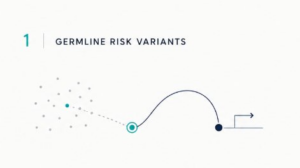
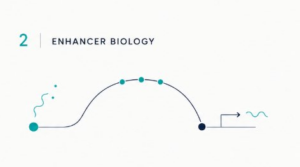
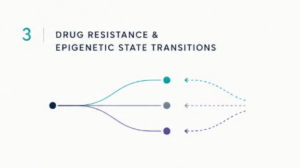
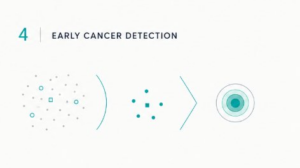
Our research is centered around investigating the functional role of the non-coding genome in cancer development using colon cancer models. By employing epigenetic analysis, genome editing techniques, and computational approaches, we aim to unravel the functional significance of non-coding genetic variants in disease susceptibility. Additionally, we seek to identify and characterize functional regulatory elements that contribute to disease development, and to understand how epigenetic plasticity drives therapeutic resistance through reversible cancer cell states. Through these efforts, our ultimate objective is to identify therapeutic vulnerabilities and leverage this knowledge for early disease detection.
Main research topics
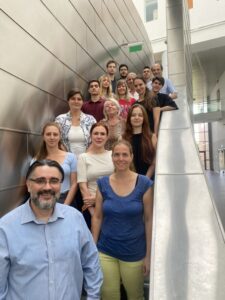
Group photo (2026)
Publications
- Abou Alaiwi S, Adib E, Zhang Z, Spisak S, Prosz A, Cordeiro P, El Zarif T, Sztupinszki ZM, Nassar AH, Seo JH, Campbell R, Steinharter JA, Machiela M, Dutta D, Chanock S, Purdue M, Pomerantz M, Signoretti S, Szallasi Z, Gusev A, Baca SC, Choueiri TK, Freedman ML.
Generation of a comprehensive epigenomic atlas in clear cell renal cell carcinoma informs kidney cancer progression and heritability.
Cell Rep. 2026 Feb 24;45(2):116968.
doi - Likasitwatanakul P, Li Z, Doan P, Spisak S, Raghawan AK, Liu Q, Liow P, Lee S, Chen D, Bala P, Sahgal P, Aitymbayev D, Thalappillil JS, Papanastasiou M, Hawkins W, Carr SA, Park H, Cleary JM, Qi J, Sethi NS.
Chemical perturbations impacting histone acetylation govern colorectal cancer differentiation.
Gastroenterology. 2026 Jan;170(1):70-88.
doi
- Kalmar A, Nagy ZB, Sumegi LD, Bartak BK, Kiss C, Spisak S, Molnar B, Takacs I.
Modulation of Peripheral Immune Cells Following Vitamin D3 Supplementation in Vitamin D-Insufficient Cancer Patients.
Nutrients. 2025 Dec 29;18(1):116.
doi - Bajtai E, Kiss C, Bakos É, Langó T, Lovrics A, Schád É, Tisza V, Hegedűs K, Fürjes P, Szabó Z, Tusnády GE, Szakács G, Tantos Á, Spisák S✉, Tóvári J✉, Füredi A✉.
Therapy-induced senescence is a transient drug resistance mechanism in breast cancer.
Mol Cancer. 2025 May 1;24(1):128.
doi
- Diossy M, Tisza V, Li H, Sahgal P, Zhou J, Sztupinszki Z, Young D, Nousome D, Kuo C, Jiang J, Chen Y, Ebner R, Sesterhenn IA, Moncur JT, Chesnut GT, Petrovics G, Klus GT, Valcz G, Nuzzo PV, Ribli D, Börcsök J, Prosz A, Krzystanek M, Ried T, Szuts D, Rizwan K, Kaochar S, Pathania S, D’Andrea AD, Csabai I, Srivastava S, Freedman ML, Dobi A✉, Spisak S✉, Szallasi Z✉.
Frequent CHD1 deletions in prostate cancers of African American men is associated with rapid disease progression.
NPJ Precis Oncol. 2024 Sep 19;8(1):208.
doi - Prosz A, Sahgal P, Huffman BM, Sztupinszki Z, Morris CX, Chen D, Börcsök J, Diossy M, Tisza V, Spisak S, Likasitwatanakul P, Rusz O, Csabai I, Cecchini M, Baca Y, Elliott A, Enzinger P, Singh H, Ubellaker J, Lazaro JB, Cleary JM, Szallasi Z, Sethi NS.
Mutational signature-based identification of DNA repair deficient gastroesophageal adenocarcinomas for therapeutic targeting.
NPJ Precis Oncol. 2024 Apr 8;8(1):87.
doi - Spisak S, Chen D, Likasitwatanakul P, Doan P, Li Z, Bala P, Vizkeleti L, Tisza V, De Silva P, Giannakis M, Wolpin B, Qi J, Sethi NS.
Identifying regulators of aberrant stem cell and differentiation activity in colorectal cancer using a dual endogenous reporter system.
Nat Commun. 2024 Mar 12;15(1):2230.
doi - Prosz A, Pipek O, Börcsök J, Palla G, Szallasi Z, Spisak S✉, Csabai I.
Biologically informed deep learning for explainable epigenetic clocks.
Sci Rep. 2024 Jan 15;14(1):1306.
doi
- Prosz A, Duan H, Tisza V, Sahgal P, Topka S, Klus GT, Börcsök J, Sztupinszki Z, Hanlon T, Diossy M, Vizkeleti L, Stormoen DR, Csabai I, Pappot H, Vijai J, Offit K, Ried T, Sethi N, Mouw KW, Spisak S✉, Pathania S✉, Szallasi Z✉.
Nucleotide excision repair deficiency is a targetable therapeutic vulnerability in clear cell renal cell carcinoma.
Sci Rep. 2023 Nov 23;13(1):20567.
doi - Sahgal P, Patil DT, Bala P, Sztupinszki ZM, Tisza V, Spisak S, Luong AG, Huffman B, Prosz A, Singh H, Lazaro JB, Szallasi Z, Cleary JM, Sethi NS.
Replicative stress in gastroesophageal cancer is associated with chromosomal instability and sensitivity to DNA damage response inhibitors.
iScience. 2023 Oct 12;26(11):108169.
doi - Szmolka A, Gellért Á, Szemerits D, Rapcsák F, Spisák S, Adorján A.
Emergence and Genomic Features of a mcr-1 Escherichia coli from Duck in Hungary.
Antibiotics (Basel). 2023 Oct 7;12(10):1519.
doi - Spisak S, Tisza V, Nuzzo PV, Seo JH, Pataki B, Ribli D, Sztupinszki Z, Bell C, Rohanizadegan M, Stillman DR, Alaiwi SA, Bartels AH, Papp M, Shetty A, Abbasi F, Lin X, Lawrenson K, Gayther SA, Pomerantz M, Baca S, Solymosi N, Csabai I, Szallasi Z, Gusev A, Freedman ML.
A biallelic multiple nucleotide length polymorphism explains functional causality at 5p15.33 prostate cancer risk locus.
Nat Commun. 2023 Aug 23;14(1):5118.
doi - Vízkeleti L, Spisák S✉.
Rewired Metabolism Caused by the Oncogenic Deregulation of MYC as an Attractive Therapeutic Target in Cancers.
Cells. 2023 Jun 29;12(13):1745. (Review)
doi - Nassar AH, Abou Alaiwi S, Baca SC, Adib E, Corona RI, Seo JH, Fonseca MAS, Spisak S, El Zarif T, Tisza V, Braun DA, Du H, He M, Flaifel A, Alchoueiry M, Denize T, Matar SG, Acosta A, Shukla S, Hou Y, Steinharter J, Bouchard G, Berchuck JE, O’Connor E, Bell C, Nuzzo PV, Mary Lee GS, Signoretti S, Hirsch MS, Pomerantz M, Henske E, Gusev A, Lawrenson K, Choueiri TK, Kwiatkowski DJ, Freedman ML.
Epigenomic charting and functional annotation of risk loci in renal cell carcinoma.
Nat Commun. 2023 Jan 21;14(1):346.
doi
- Nardone A, Qiu X, Spisak S, Nagy Z, Feiglin A, Feit A, Cohen Feit G, Xie Y, Font-Tello A, Guarducci C, Hermida-Prado F, Syamala S, Lim K, Munoz Gomez M, Pun M, Cornwell M, Liu W, Ors A, Mohammed H, Cejas P, Brock JB, Freedman ML, Winer EP, Fu X, Schiff R, Long HW, Metzger Filho O, Jeselsohn R.
A Distinct Chromatin State Drives Therapeutic Resistance in Invasive Lobular Breast Cancer.
Cancer Res. 2022 Oct 17;82(20):3673-3686.
doi - Francini E, Fanelli GN, Pederzoli F, Spisak S, Minonne E, Raffo M, Pakula H, Tisza V, Scatena C, Naccarato AG, Loda M, Nuzzo PV.
Circulating Cell-Free DNA in Renal Cell Carcinoma: The New Era of Precision Medicine.
Cancers (Basel). 2022 Sep 7;14(18):4359. (Review)
doi - Valcz G, Újvári B, Buzás EI, Krenács T, Spisák S, Kittel Á, Tulassay Z, Igaz P, Takács I, Molnár B.
Small extracellular vesicle DNA-mediated horizontal gene transfer as a driving force for tumor evolution: Facts and riddles.
Front Oncol. 2022 Aug 8;12:945376. (Review)
doi - Duronio GN, Liang X, Hebbar P, Islam M, Spisak S, Sethi NS.
Truncating SOX9 Alterations Are Heterozygous Null Alleles in Genome-Stable Colorectal Cancer.
Gastro Hep Adv. 2022;1(5):709-713.
doi - Lu X, Fong KW, Gritsina G, Wang F, Baca SC, Brea LT, Berchuck JE, Spisak S, Ross J, Morrissey C, Corey E, Chandel NS, Catalona WJ, Yang X, Freedman ML, Zhao JC, Yu J.
HOXB13 suppresses de novo lipogenesis through HDAC3-mediated epigenetic reprogramming in prostate cancer.
Nat Genet. 2022 May;54(5):670-683.
doi - Berchuck JE, Baca SC, McClure HM, Korthauer K, Tsai HK, Nuzzo PV, Kelleher KM, He M, Steinharter JA, Zacharia S, Spisak S, Seo JH, Conteduca V, Elemento O, Auh J, Sigouros M, Corey E, Hirsch MS, Taplin ME, Choueiri TK, Pomerantz MM, Beltran H, Freedman ML.
Detecting Neuroendocrine Prostate Cancer Through Tissue-Informed Cell-Free DNA Methylation Analysis.
Clin Cancer Res. 2022 Mar 1;28(5):928-938.
doi - Liang X, Duronio GN, Yang Y, Bala P, Hebbar P, Spisak S, Sahgal P, Singh H, Zhang Y, Xie Y, Cejas P, Long HW, Bass AJ, Sethi NS.
An Enhancer-Driven Stem Cell-Like Program Mediated by SOX9 Blocks Intestinal Differentiation in Colorectal Cancer.
Gastroenterology. 2022 Jan;162(1):209-222.
doi
- Guo H, Wu Y, Nouri M, Spisak S, Russo JW, Sowalsky AG, Pomerantz MM, Wei Z, Korthauer K, Seo JH, Wang L, Arai S, Freedman ML, He HH, Chen S, Balk SP.
Androgen receptor and MYC equilibration centralizes on developmental super-enhancer.
Nat Commun. 2021 Dec 15;12(1):7308.
doi - Giambartolomei C, Seo JH, Schwarz T, Freund MK, Johnson RD, Spisak S, Baca SC, Gusev A, Mancuso N, Pasaniuc B, Freedman ML.
H3K27ac HiChIP in prostate cell lines identifies risk genes for prostate cancer susceptibility.
Am J Hum Genet. 2021 Dec 2;108(12):2284-2300.
doi - Börcsök J, Diossy M, Sztupinszki Z, Prosz A, Tisza V, Spisak S, Rusz O, Stormoen DR, Pappot H, Csabai I, Brunak S, Mouw KW, Szallasi Z.
Detection of Molecular Signatures of Homologous Recombination Deficiency in Bladder Cancer.
Clin Cancer Res. 2021 Jul 1;27(13):3734-3743.
doi - Diossy M, Sztupinszki Z, Borcsok J, Krzystanek M, Tisza V, Spisak S, Rusz O, Timar J, Csabai I, Fillinger J, Moldvay J, Pedersen AG, Szuts D, Szallasi Z.
A subset of lung cancer cases shows robust signs of homologous recombination deficiency associated genomic mutational signatures.
NPJ Precis Oncol. 2021 Jun 18;5(1):55.
doi - Börcsök J, Sztupinszki Z, Bekele R, Gao SP, Diossy M, Samant AS, Dillon KM, Tisza V, Spisák S, Rusz O, Csabai I, Pappot H, Frazier ZJ, Konieczkowski DJ, Liu D, Vasani N, Rodrigues JA, Solit DB, Hoffman-Censits JH, Plimack ER, Rosenberg JE, Lazaro JB, Taplin ME, Iyer G, Brunak S, Lozsa R, Van Allen EM, Szüts D, Mouw KW, Szallasi Z.
Identification of a Synthetic Lethal Relationship between Nucleotide Excision Repair Deficiency and Irofulven Sensitivity in Urothelial Cancer.
Clin Cancer Res. 2021 Apr 1;27(7):2011-2022.
doi - Nuzzo PV*, Berchuck JE*, Korthauer K*, Spisak S*, Nassar AH, Abou Alaiwi S, Chakravarthy A, Shen SY, Bakouny Z, Boccardo F, Steinharter J, Bouchard G, Curran CR, Pan W, Baca SC, Seo JH, Lee GM, Michaelson MD, Chang SL, Waikar SS, Sonpavde G, Irizarry RA, Pomerantz M, De Carvalho DD, Choueiri TK, Freedman ML.
Detection of renal cell carcinoma using plasma and urine cell-free DNA methylomes.
Nat Med. 2020 Jul;26(7):1041-1043.
doi - Sztupinszki Z, Diossy M, Krzystanek M, Borcsok J, Pomerantz MM, Tisza V, Spisak S, Rusz O, Csabai I, Freedman ML, Szallasi Z.
Detection of Molecular Signatures of Homologous Recombination Deficiency in Prostate Cancer with or without BRCA1/2 Mutations.
Clin Cancer Res. 2020 Jun 1;26(11):2673-2680.
doi - Póti Á, Gyergyák H, Németh E, Rusz O, Tóth S, Kovácsházi C, Chen D, Szikriszt B, Spisák S, Takeda S, Szakács G, Szallasi Z, Richardson AL, Szüts D.
Correlation of homologous recombination deficiency induced mutational signatures with sensitivity to PARP inhibitors and cytotoxic agents.
Genome Biol. 2019 Nov 14;20(1):240.
doi - Valcz G, Buzás EI, Kittel Á, Krenács T, Visnovitz T, Spisák S, Török G, Homolya L, Zsigrai S, Kiszler G, Antalffy G, Pálóczi K, Szállási Z, Szabó V, Sebestyén A, Solymosi N, Kalmár A, Dede K, Lőrincz P, Tulassay Z, Igaz P, Molnár B.
En bloc release of MVB-like small extracellular vesicle clusters by colorectal carcinoma cells.
J Extracell Vesicles. 2019 Apr 8;8(1):1596668.
doi - Takeda DY, Spisák S*, Seo JH, Bell C, O’Connor E, Korthauer K, Ribli D, Csabai I, Solymosi N, Szállási Z, Stillman DR, Cejas P, Qiu X, Long HW, Tisza V, Nuzzo PV, Rohanizadegan M, Pomerantz MM, Hahn WC, Freedman ML.
A Somatically Acquired Enhancer of the Androgen Receptor Is a Noncoding Driver in Advanced Prostate Cancer.
Cell. 2018 Jul 12;174(2):422-432.e13.
doi - Pomerantz MM, Spisák S*, Jia L, Cronin AM, Csabai I, Ledet E, Sartor AO, Rainville I, O’Connor EP, Herbert ZT, Szállási Z, Oh WK, Kantoff PW, Garber JE, Schrag D, Kibel AS, Freedman ML.
The association between germline BRCA2 variants and sensitivity to platinum-based chemotherapy among men with metastatic prostate cancer.
Cancer. 2017 Sep 15;123(18):3532-3539.
doi - Spisák S, Lawrenson K, Fu Y, Csabai I, Cottman RT, Seo JH, Haiman C, Han Y, Lenci R, Li Q, Tisza V, Szállási Z, Herbert ZT, Chabot M, Pomerantz M, Solymosi N; GAME-ON/ELLIPSE Consortium; Gayther SA, Joung JK, Freedman ML.
CAUSEL: an epigenome- and genome-editing pipeline for establishing function of noncoding GWAS variants.
Nat Med. 2015 Nov;21(11):1357-63.
doi
* equal contribution · ✉ corresponding author
Preprints
Vízkeleti L*, Kiss C*, Tisza V, Zichy A, Markovics A, Kalmár A, Szabó P, Csabai I, Pongor L, Spisák S#, Molnár B#. One-carbon metabolism controls colorectal cancer cell state and chemosensitivity through chromatin remodeling. bioRxiv, 2026. doi: 10.64898/2026.09.30.755690.
Kiss C*, Bécsei Á*, Tisza V, Pongor LS, Csabai I , Spisák S#. Hidden complex variants restore the regulatory link at colorectal cancer risk loci. bioRxiv, 2026.
Kiss C, Vízkeleti L, Bécsei Á, Csabai I, Pongor LS, Spisák S#. Stromal and immune regulatory chromatin encodes a non-cell-autonomous fraction of inherited colorectal cancer risk. bioRxiv, 2026.
Recent events
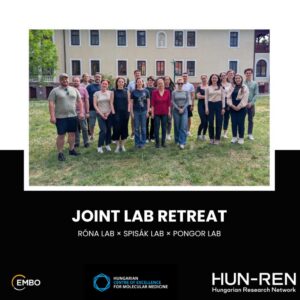
Genomic and Epigenomic Maintenance in Cells
Hungary · Csopak · May 4–6
Collaborations
International
Dana-Farber Cancer Institute, Boston, MA, USA
Boston Children’s Hospital, Boston, MA, USA
University of Massachusetts, Boston, MA, USA
Weill Cornell Medicine, New York, NY, USA
Medical University of Vienna, Vienna, Austria
Paris-Lodron-University Salzburg, Salzburg, Austria
Institutional
HUN-REN Biological Research Centre, Szeged
HUN-REN Research Centre for Natural Sciences, Institute of Organic Chemistry, Budapest
HUN-REN Centre for Agricultural Research, Budapest
National
Semmelweis University, Budapest
Eotvos Lorand University, Budapest
National Korányi Institute for Pulmonology, Budapest
Hungarian Centre of Excellence for Molecular Medicine (HCEMM), Szeged
Lab members