


Supported by the Swiss Contribution with the national co-financing of the Hungarian Government, this international research collaboration aims to identify novel drug candidate molecules that may contribute to the development of new treatments for cancer and bacterial infections.
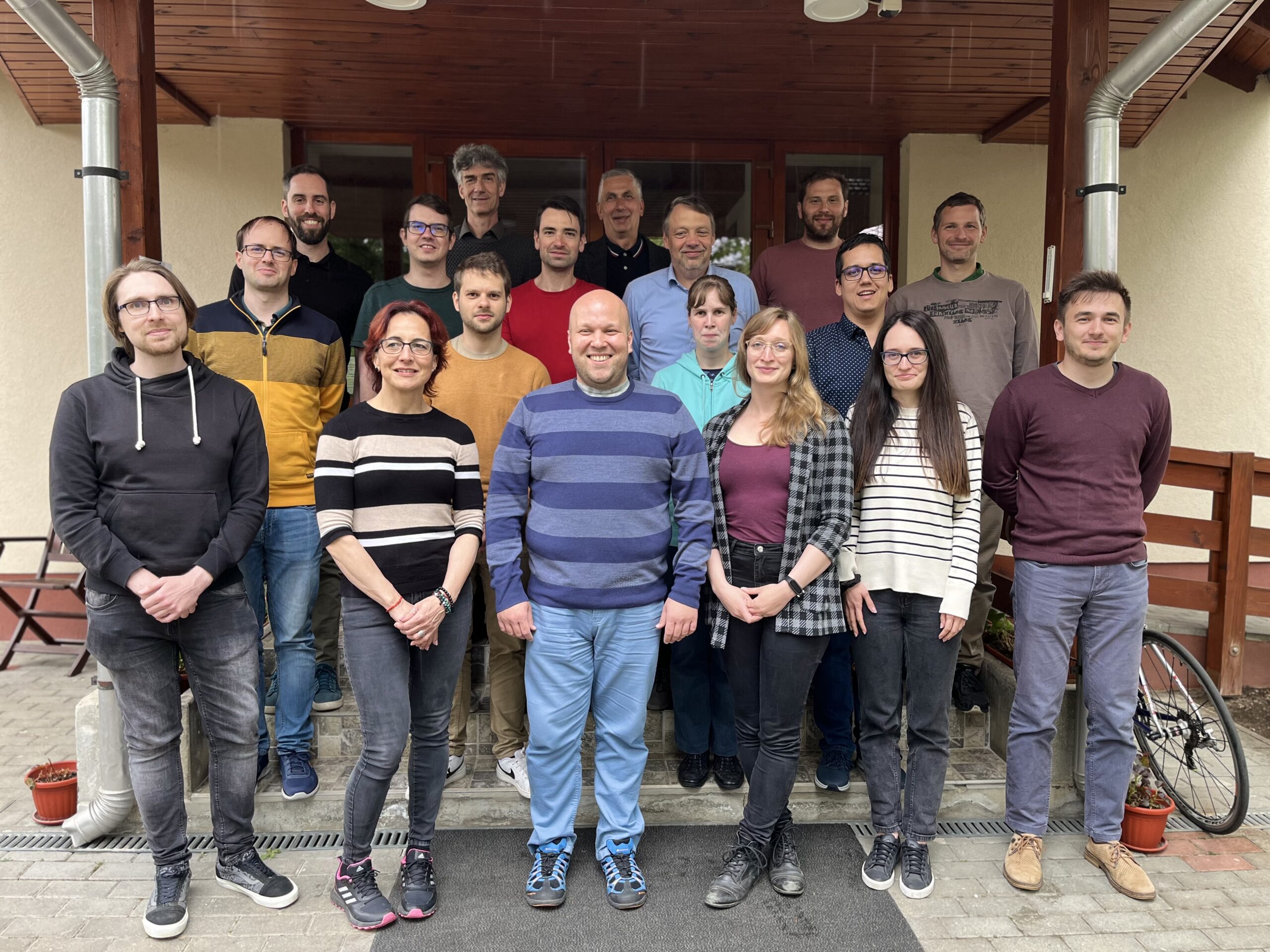
The project brings together the expertise of leading research groups from three countries: Switzerland, Hungary and Romania. Researchers from EPFL in Switzerland, HUN-REN TTK in Hungary and BBU in Romania are working together to develop an innovative approach to drug discovery.
The research focuses on inhibiting protein-protein interactions (PPIs). These interactions play an important role in the development and progression of many diseases. However, targeting them with drugs remains a major challenge, as conventional drug molecules often cannot bind effectively to the surfaces of the proteins involved.
The innovative approach of the project is based on the use of small, ring-shaped molecules known as cyclic peptides. These molecules can bind to protein surfaces that are difficult to target using conventional drug discovery methods. The project will generate large libraries of structurally diverse molecules and screen them using state-of-the-art, high-throughput technologies to identify compounds with promising biological activity.
The research will focus on four key therapeutic targets. The KRas and STAT proteins are important targets in cancer research, while the bacterial protein systems YejM-LapB and DprE1-DprE2 offer potential opportunities for the development of new antibiotics.
The three research groups will combine their complementary expertise and technologies. The Swiss partner will contribute innovative methods for the synthesis and screening of cyclic peptides; the Hungarian research group will provide expertise in medicinal chemistry and drug discovery, together with established screening systems for cancer-related targets; and the Romanian partner will contribute the research methods and assays required to investigate the bacterial targets.
This collaboration will facilitate the exchange of innovative research technologies and methodologies, strengthen research capacities and foster international scientific cooperation. Researcher and student exchanges, joint scientific activities and knowledge transfer will play an important role in the project.
The long-term objective is to identify novel drug candidate molecules that may contribute to the development of more effective anticancer therapies and new antibiotics. In addition, the project will address fundamental scientific questions in drug discovery and may open up new opportunities for targeting protein-protein interactions that have so far been difficult to address with conventional therapeutic approaches.
The project is supported by the Swiss Contribution with the national co-financing of the Hungarian Government between 01/07/2025-01/07/2029 (grant no.: IZ11Z0_230109, total funds: 1 039 932 CHF)