There is a competition where the winner is not the fastest team, but the one that achieves the highest energy efficiency. The Shell Eco-marathon is the world’s largest sustainability competition for university students, bringing together around 5,000 participants from approximately 50 countries. Each year, the Europe and Africa regional event takes place at the Silesia Ring circuit in Poland, with the best-performing teams qualifying for the world final in Qatar.
Student teams design and build vehicles in several categories. The objective is to complete a prescribed distance within a specified time limit (15 km in 45 minutes) while consuming as little energy as possible. Vehicles compete either in the Prototype category or the Urban Concept category, the latter requiring greater similarity to road vehicles, including features such as four wheels, lighting, doors, and luggage space. Both categories include three powertrain classes: internal combustion engine (ICE), battery electric vehicle (BEV), and hydrogen fuel cell electric vehicle (FCEV).
The SHARK Team had previous experience in the Shell Eco-marathon. At the same time, the Electrochemistry Laboratory of the Renewable Energy Research Group at the HUN-REN Research Centre for Natural Sciences (HUN-REN RCNS) is probably the only laboratory in Hungary where fuel cell experiments are conducted on a regular basis, covering the development of key fuel cell components from catalysts and membranes to bipolar plates. Both groups participated in the National Laboratory for Renewable Energy programme. An additional advantage was the close proximity of the mechanical engineering workshop and the fuel cell laboratory, which enabled frequent in-person collaboration.
The challenge was considerable, as no hydrogen fuel cell racing vehicle had previously been built in Hungary. The team set itself an ambitious goal by developing its own fuel cell stack instead of using a commercially available system.
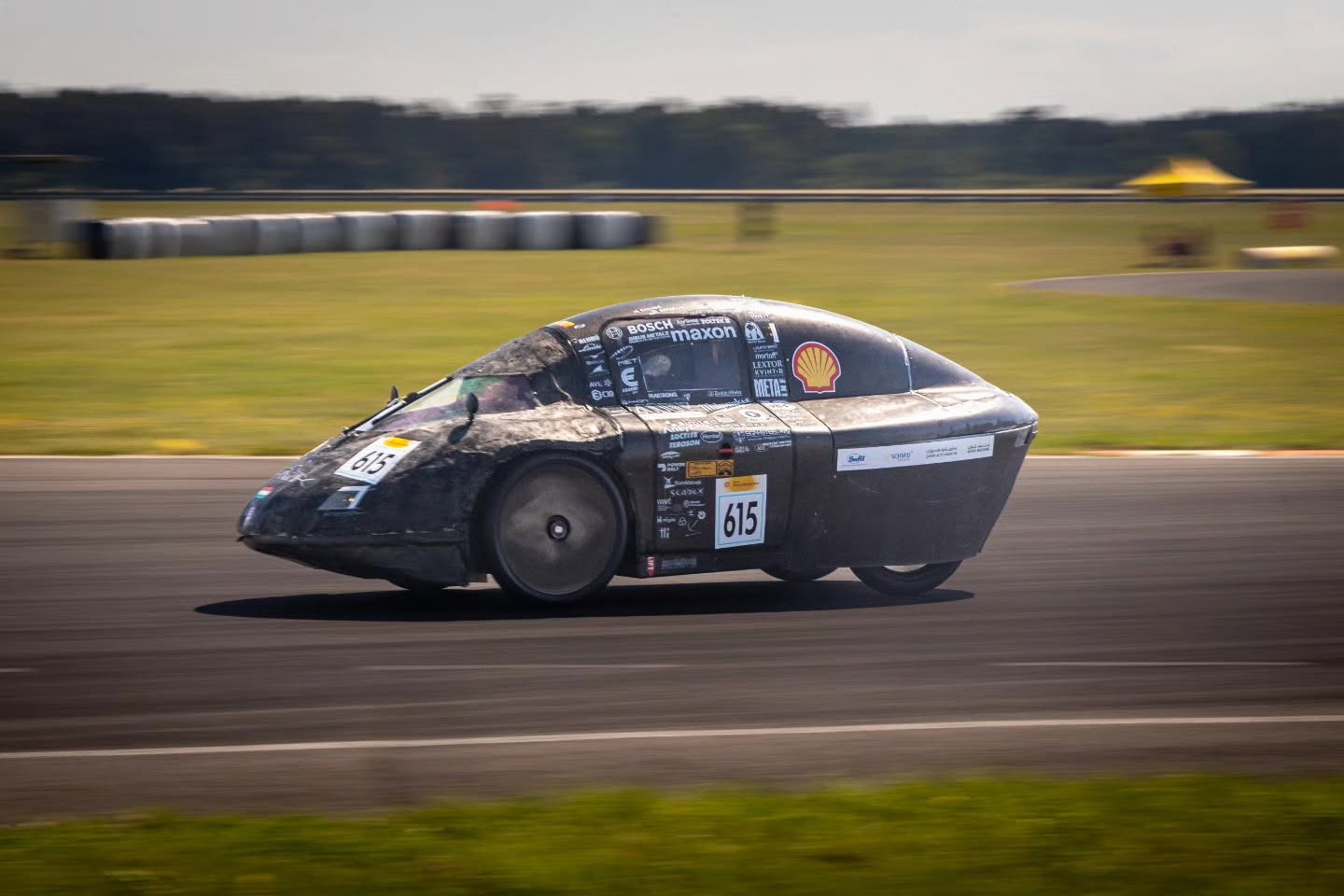
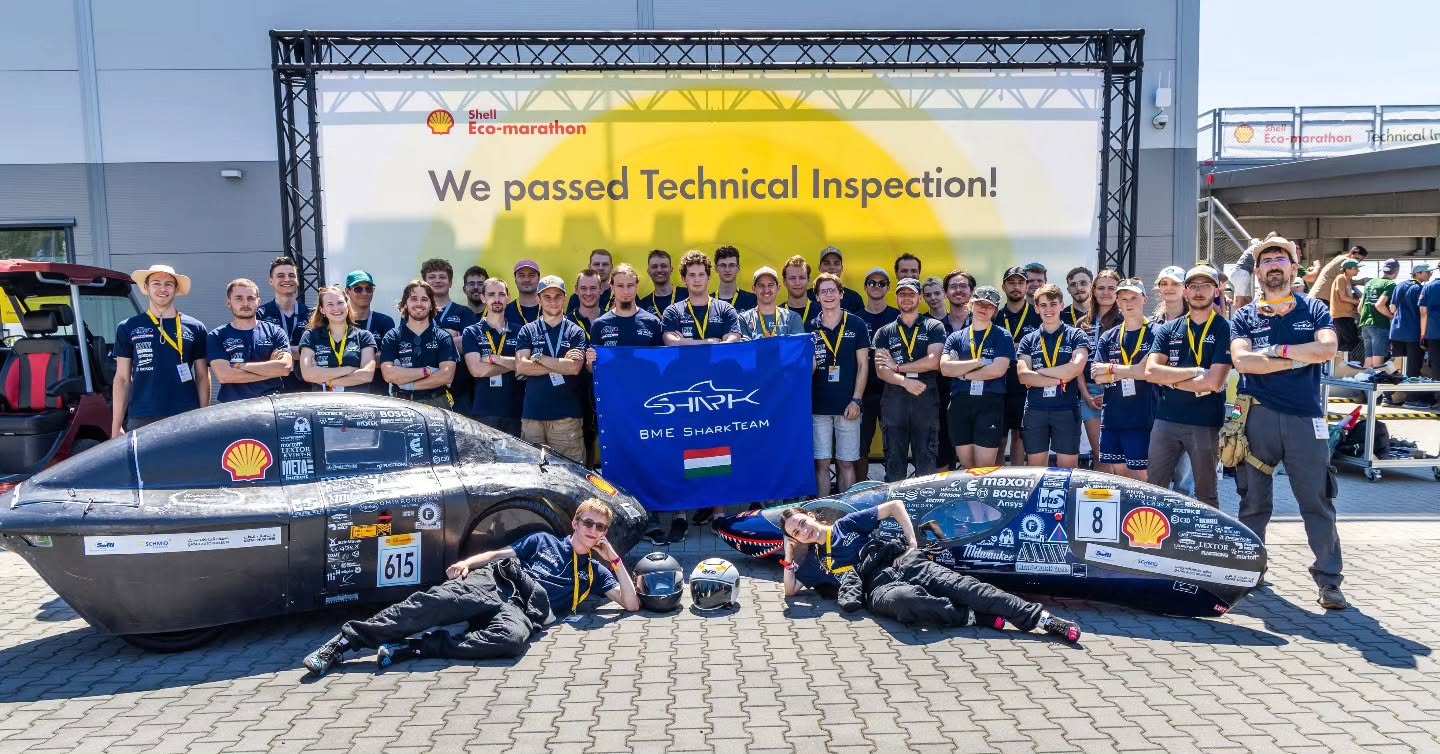
The SHARK Team’s Urban Concept FCEV was named Luna, while its official competition name was BME HydroShark. The team’s most significant achievement was successfully passing the Shell Eco-marathon Technical Inspection, the mandatory technical assessment required before vehicles are allowed to compete.
Luna completed three laps of the circuit. Although the vehicle exceeded the official time limit, the test clearly demonstrated that it was fully operational and that the custom-built fuel cell stack was capable of charging the onboard supercapacitor. Hungary’s first hydrogen fuel cell racing vehicle had been successfully built.
The vehicle was designed and assembled in Hungary through the collaboration of the Budapest University of Technology and Economics and the HUN-REN Research Centre for Natural Sciences. Most of Luna’s components were also manufactured in Hungary.
The project does not end here. Although the 2026 Shell Eco-marathon has concluded, preparations for next year’s competition are already underway. New concepts are being evaluated, and the first experiments with improved fuel cell components have already begun.